


Abortion Information
Learn About Abortion Procedures and Your Options.
Get medically accurate information before you make any decision.
Call or book your free appointment now — confidential, no insurance needed.
⚠️ Important to Know Before Reading Further. SHPC does not provide, perform, or refer for abortions.
We offer free medical services to help you get accurate information before you make any decision.


Your Privacy Is Protected.
Before anything else — if privacy is a concern, you can come to us without anyone knowing.
- Your appointment is completely confidential
- We do not contact anyone on your behalf without your permission
- Nothing about your visit is shared without your consent
- You are in control of your information at every step
Understanding Your Options — The Facts on Abortion Procedures
There are two primary categories of abortion: medication abortion and in-clinic procedures. Which is available to you depends primarily on how far along the pregnancy is.

Option 1 — Medication Abortion (The Abortion Pill)
How it works: Medication abortion uses a two-drug regimen:
- A Progesterone Blocker is taken first. It blocks progesterone, a hormone required for a pregnancy to continue developing.
- A Labor-Induction Agent is taken 24–48 hours later. It causes the uterus to contract and expel the pregnancy, in a process similar to an early miscarriage.
The process typically takes one to two weeks to complete. A follow-up appointment is required to confirm that the pregnancy has fully ended.
📋 Medical Note: The FDA-approved mifepristone and misoprostol regimen is indicated only through 70 days (10 weeks) of gestational age, per the current FDA Mifeprex REMS program. ¹
What to expect:
- Heavy bleeding and passing of clots
- Cramping, which can range from moderate to intense
- Nausea, vomiting, or diarrhea
- Chills or low-grade fever in the 24 hours following misoprostol
Risks and when to seek emergency care:
- Soaking more than two maxi pads per hour for two or more consecutive hours
- Fever above 101°F lasting more than 24 hours
- Severe abdominal pain not relieved by ibuprofen or prescribed pain medication
- No bleeding within 24 hours of taking misoprostol
- Signs of infection: foul-smelling discharge, prolonged fever, persistent chills
⚠️ If you experience any of the above symptoms, go to an emergency room immediately.
Who may not be eligible:
- Pregnancies beyond 10 weeks of gestational age
- Pregnancies located outside the uterus (ectopic pregnancy) — the abortion pill cannot treat an ectopic pregnancy and will not resolve it
- Women with bleeding disorders or on blood thinners
- Women with an IUD in place
- Certain other medical conditions — a full health history review is important before use
Option 2 — In-Clinic Procedures (Surgical Abortion)
In-clinic procedures are performed by a physician at a licensed medical facility. The method used depends on gestational age.
Aspiration Abortion (Vacuum Aspiration) Typically used through approximately 14–16 weeks
How it works: The cervix is dilated, and a suction device is used to empty the uterus. The procedure typically takes 5–10 minutes in the clinic, though the time at the facility will be longer. Local or general anesthesia may be used, depending on the provider and patient preference.
What to expect afterward:
- Cramping similar to strong menstrual cramps
- Light to moderate bleeding for one to two weeks
- Emotional responses vary — both relief and grief are normal
Risks include:
- Infection
- Injury to the cervix or uterus
- Incomplete procedure requiring follow-up treatment
- Rarely, perforation of the uterus
- Reaction to anesthesia
Dilation and Evacuation (D&E) Typically used from approximately 14 weeks onward
How it works: The cervix is dilated, typically over one to two days, using preparatory medication or dilators. The physician then uses a combination of suction and surgical instruments to empty the uterus. General anesthesia is more commonly used for this procedure.
What to expect afterward:
- Heavier cramping and bleeding than earlier procedures
- Recovery time varies by individual
- Follow-up care is required
Risks include:
- Infection
- Injury to the cervix, uterus, or surrounding organs
- Incomplete procedure requiring additional treatment
- Blood clots
- Reaction to anesthesia
- Rarely, damage to the cervix can affect future pregnancies
⚠️ If after any in-clinic procedure you experience heavy bleeding, fever above 101°F, severe pain, or foul-smelling discharge, seek emergency medical care immediately.
Why an Ultrasound Matters Before Any Procedure
Regardless of which method you are considering, an ultrasound before any abortion procedure is medically important. Here is why:
✔ Confirms gestational age. Gestational age determines which procedures are available, what they involve, and what they cost. Estimates based on your last menstrual period are not always accurate.
✔ Confirms pregnancy location. According to published clinical data, approximately 1–2% of pregnancies implant outside the uterus. ² An undetected ectopic pregnancy is a medical emergency. Neither the abortion pill nor an in-clinic procedure will resolve it — and symptoms can be masked by post-procedure bleeding.
³ An ultrasound may show the pregnancy is no longer developing, which could mean no procedure is needed at all.
Skipping this step carries real medical risk — and in some cases, unnecessary cost.
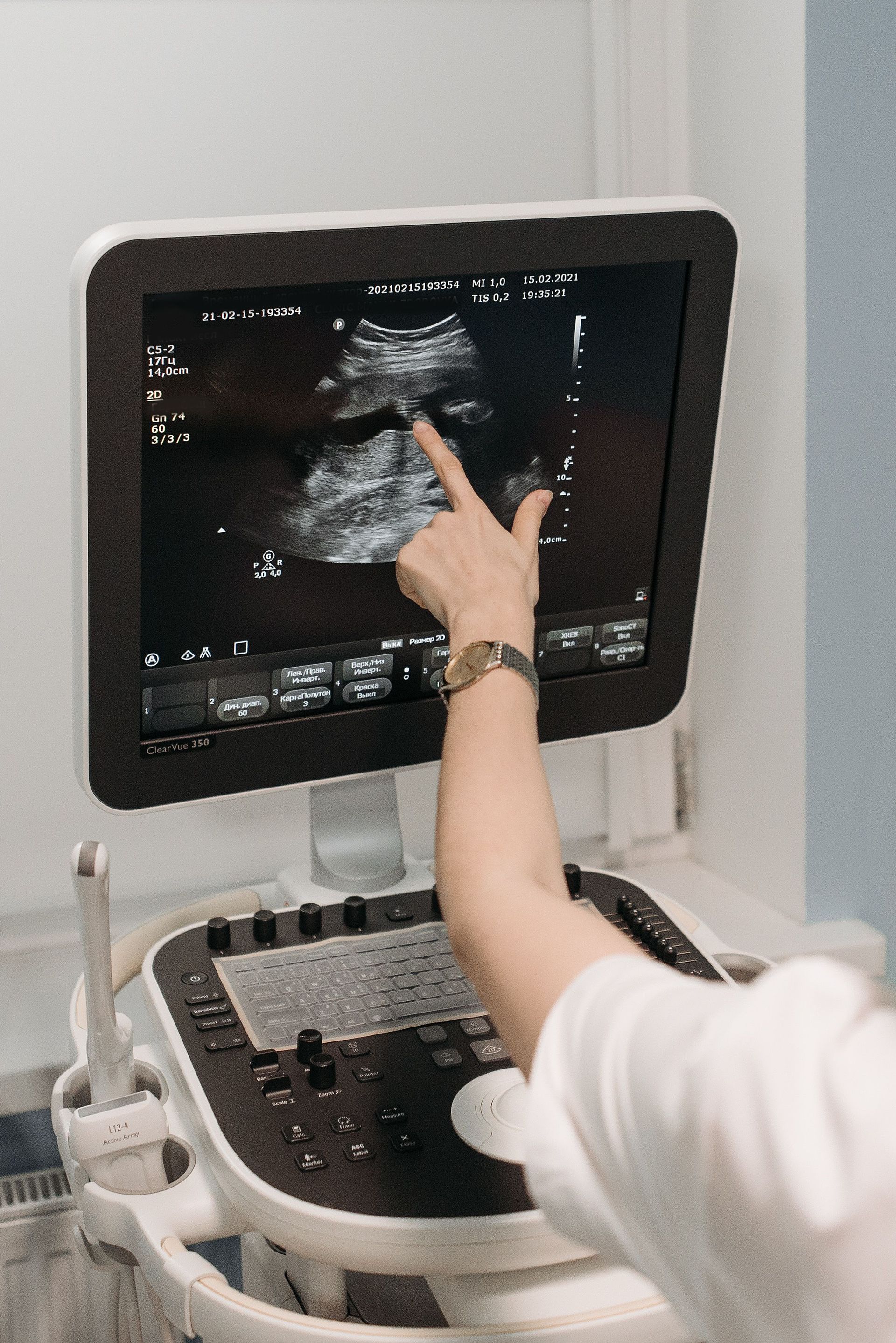

What We Offer — At No Cost to You
Free Pregnancy Test
Clinical urine pregnancy testing in a medical setting, reducing the risk of false results associated with home testing. ⁴
Free Limited Ultrasound Checks:
gestational age, confirm that the pregnancy is in the uterus, and may show whether the pregnancy is still developing. Performed under the supervision of licensed medical professionals.
Free Options Consultation:
A private, judgment-free conversation — at your pace — covering:
- How each procedure works and what to expect
- Risks and side effects associated with each method
- Warning signs that require emergency medical attention
- Gestational age and how it affects your options
- Costs and what affects them
- Questions to ask a provider before you pay or schedule anything
- Your legal rights in New Jersey
- Support is available to you now, whatever you decide
All services are provided under the supervision of licensed physicians and qualified medical professionals. No insurance required. No hidden fees. Ever.
📅 Ready to get the facts? Book your free appointment now.
Why Come Here First?
Women come to SHPC because they want:
- Medically accurate, complete information before making any decision
- Clarity on gestational age and pregnancy location before paying for anything
- A private, pressure-free space with no hidden agenda
- Free services with no insurance required and no hidden costs
Every woman processes these decisions differently. If you ever need space to talk or heal afterward, we’re here for you — grief can take many forms.
⚠️ Important to Know: SHPC does not provide, perform, or refer for abortions. Our role is to provide accurate medical information and essential pre-decision services — completely free of charge. We are not an abortion provider.
If an ultrasound raises any medical concerns, we will help connect you to appropriate medical care.
Schedule an Appointment
All of our services are completely free and confidential. You do not need insurance, and nobody will be notified about your visit to our office.
We do not provide or refer abortions.
We are available 24/7 over the phone for people who prefer speaking to someone and those seeking same-day appointments.
Please note this is only a request.
Your selection is not confirmed until you hear from a Solutions staff member.
What To Expect
- After your appointment is confirmed, mobile forms will be sent to you through text. This enables our appointments to go smoothly.
- One of our client advocates will meet with you privately to discuss the options you have and the services we offer. Once your pregnancy test is positive, you will undergo an ultrasound with our licensed RDMS.
- If you are uninsured, we can provide medical and material referrals and are always here to be a resource, even after you leave our doors.
- Due to HIPAA, recording is not allowed on the premises.
*please schedule Pregnancy and Ultrasound tests on the hour (9:00, 10:00 etc)
References
¹ U.S. Food and Drug Administration. U.S. Post-Market Requirements and Commitments: REMS Program. Silver Spring, MD: FDA; updated 2023. Available at: fda.gov/drugs. (Confirms approved use through 70 days of gestational age under the program.)
² Barnhart KT. Clinical practice: ectopic pregnancy. New England Journal of Medicine. 2009;361(4):379–387. (Estimates ectopic pregnancy occurrence at approximately 1–2% of all pregnancies in the United States.)
³ American College of Obstetricians and Gynecologists (ACOG). Early Pregnancy Loss. Practice Bulletin No. 200. Washington, DC: ACOG; 2018. Available at: acog.org. (Establishes that 10–20% of clinically recognized pregnancies end in spontaneous abortion, the majority in the first trimester.)
⁴ Cole LA, Khanlian SA, Sutton JM, Davies S, Rayburn WF. Accuracy of home pregnancy tests at the time of missed menses. American Journal of Obstetrics and Gynecology. 2004;190(1):100–105. (Establishes that home pregnancy tests vary significantly in sensitivity and are subject to false results; clinical testing in a medical setting provides greater interpretive accuracy.)